Artificial Intelligence is one of the most useful tools in our generation. It can be used to increase efficiency and also complete time-consuming tasks. The prevalence of AI has been distributed throughout many different fields, even to the point where it is causing some people to lose their jobs. Focusing on more of the benefits, Artificial Intelligence has become a useful tool for deciphering words on ancient scrolls that may be too difficult for humans to accomplish.
Ancient inscriptions can take on many forms, whether on stone, walls of buildings, or particular metals. The words found on these different materials are directly from the Ancient people, an artifact that we have very little of. The images below depict the great challenge to decipher some of the writings.
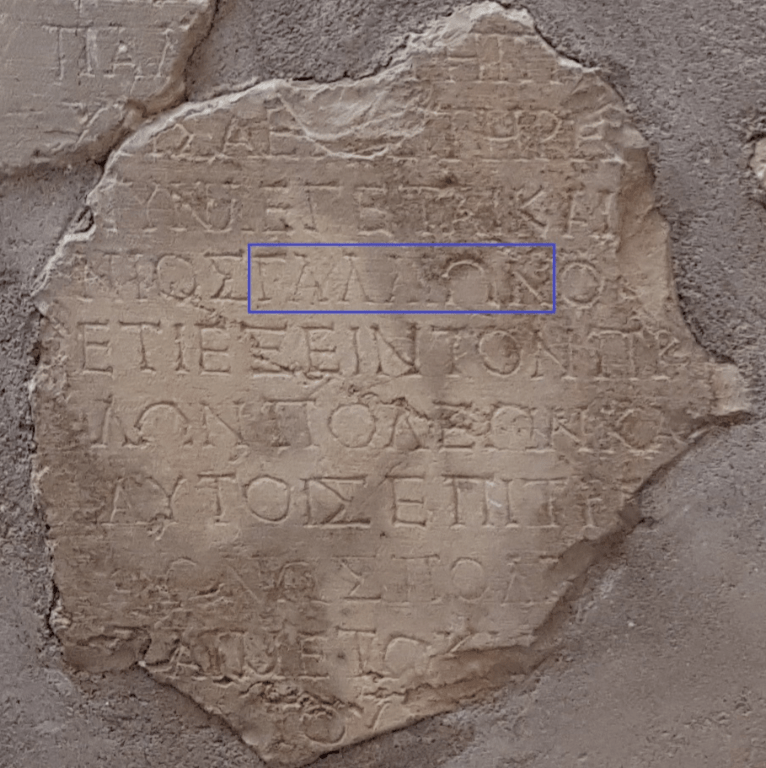
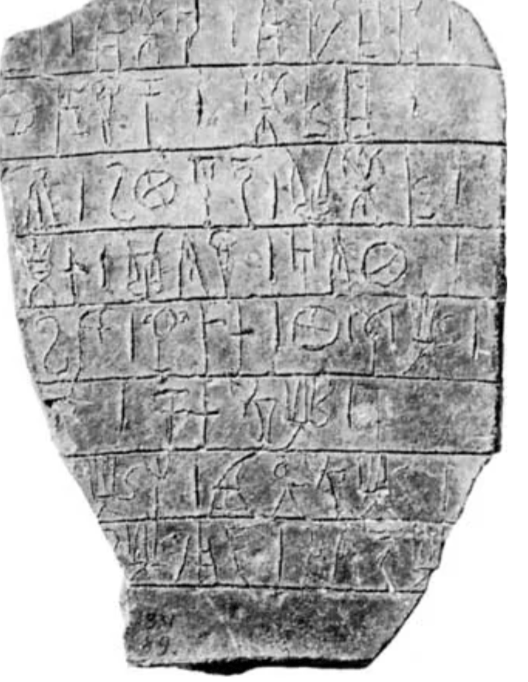
Now, modern techniques also allow anthropologists and historians to allow missing pieces to be patched up. The first deep neural network is Ithaca (https://ithaca.deepmind.com/ ), which has the ability to restore Ancient Greek inscriptions and attribute a time and place for specific pieces.
When there are breaks or cracks in the stone, humans have almost no capability of finding what word is missing. Scientists can paste the existing text into the neural network of Ithaca, which will output thousands of other past inscriptions to predict what word is missing. The machine learning behind Ithaca has a much wider source of possibilities than a human brain could ever have. Aside from just the missing word, Ithaca can provide historians with maps and scientific charts to attribute the input to a specific location and time period.
What are current ongoing projects between AI and scrolls? In AD79, Mount Vesuvius erupted and caused many ancient scrolls of a villa library at Pompeii and Herculaneum to be carbonized. Currently, researchers have launched a worldwide contest to read the charred papyri of Herculaneum, specifically with AI’s ability to extract specific letters and symbols from X-ray images of the documents.
[UPDATE 10/15/23]
After writing this issue a few months ago, a $40,000 prize was awarded to Luke Farritor, for his findings on the first letters, over 10 Greek characters, of the rolled up scrolls. The difficulty behind this task was how fragile the original scrolls are– the moment you try and unroll them, they would crumble into dust. Luke’s breakthrough came from his development of a machine learning algorithm that detected minute texture differences between areas with and without ink on the papyrus.
 Ink-Stained Classics
Leave a comment